Safety
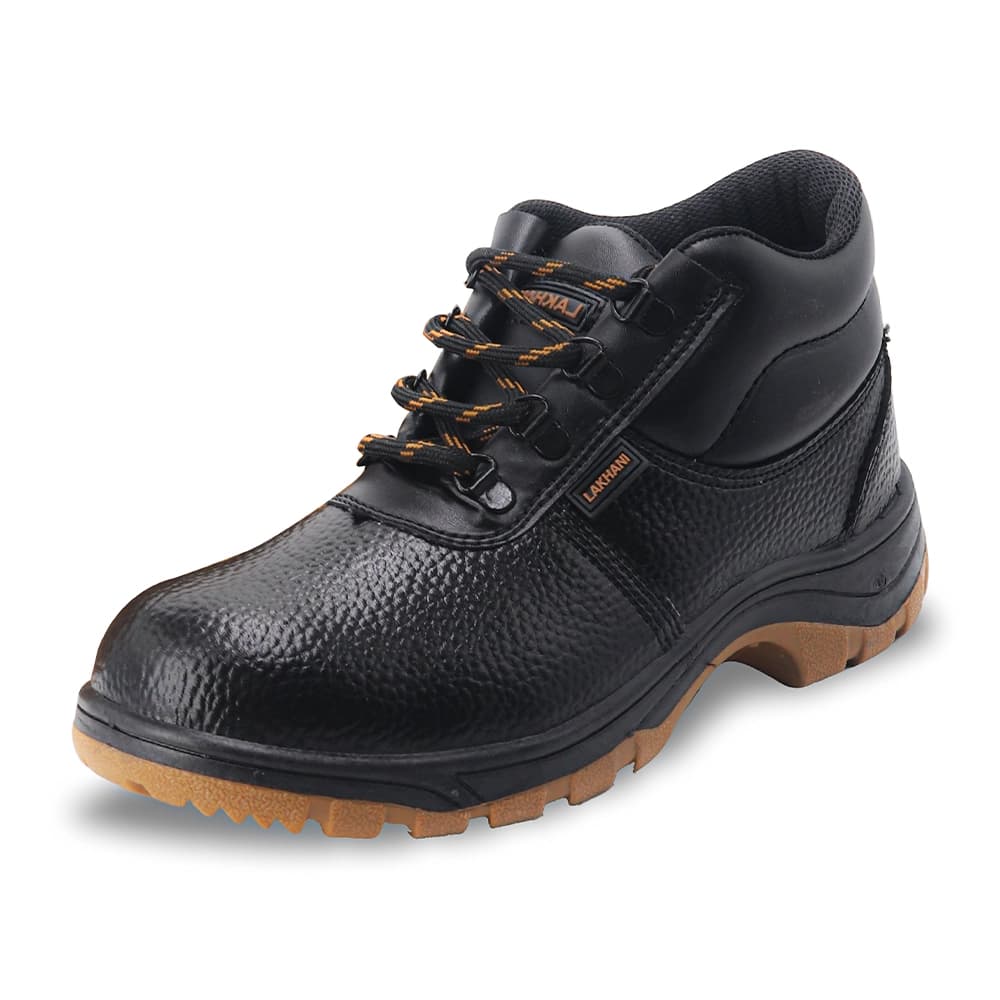
Industrial-grade footwear featuring reinforced toes and anti-penetration soles to ensure maximum protection in hazardous work environments.
- Upper: Toughened Leather (Oil & Acid Resistant)
- Sole: Double Density PU (Anti-Static)
- Key Tech: Steel Toe Cap (200J Impact Resistance)
Safety Shoes for Men
Explore Lakhani safety shoes for men, designed for suitable industrial workplaces where protective footwear, reliable construction and a secure fit are important. Available product information describes a toughened leather upper, a double-density PU sole, anti-penetration protection and a steel toe cap designed for 200-joule impact resistance.
These high-cut work shoes may be considered for factories, workshops, warehouses, fabrication units and other industrial environments. The correct safety footwear must always be selected against the actual workplace hazards, employer requirements and applicable safety standards.
Why Choose Lakhani Safety Shoes?
Industrial work can involve risks that ordinary casual footwear is not designed to address, including falling objects, sharp debris, oil, acids and hard work surfaces. Safety shoes are chosen for their protective features as well as their fit and suitability for the job.
Lakhani safety shoes combine a reinforced toe area with a structured upper and work-focused sole. However, one pair is not automatically right for every site or activity. Confirm the required protection category with the employer or site manager before making a choice.
Toughened Leather Upper
The upper is made from toughened leather and is described as oil- and acid-resistant. It provides structured coverage across the foot for regular industrial use.
Resistance does not mean the footwear is suitable for continuous contact with aggressive liquids. Performance can vary with the substance, concentration, duration of exposure and footwear condition. Remove contamination promptly in line with workplace cleaning procedures.
Steel Toe Cap With 200-Joule Impact Resistance
The steel toe cap creates a reinforced barrier around the toes. According to the available product information, it is designed for 200-joule impact resistance, making it relevant where a workplace risk assessment identifies impact hazards from tools, equipment or materials.
Correct sizing is essential: the toes should not touch the protective cap while standing, walking or bending. Unlike a regular upper, the rigid toe area will not stretch to accommodate a tight fit.
Double-Density PU Sole
The sole uses double-density polyurethane construction, creating a practical work-focused base beneath the foot. Inspect the outsole regularly for cuts, separation, major wear or other damage that could affect its condition.
Anti-Static Properties
The double-density PU sole is described as anti-static. Anti-static footwear is intended to help reduce static accumulation in suitable conditions.
It is not the same as electrically insulating footwear and should not automatically be treated as protection against electric shock. The appropriate footwear category must be determined by the site’s electrical-risk assessment and safety policy.
Anti-Penetration Protection
The footwear is described as having anti-penetration sole protection for work areas where sharp objects or debris may be underfoot. Inspect the shoes after contact with nails, metal fragments or similar hazards, and remove any damaged pair from service according to workplace procedure.
High-Cut Lace-Up Construction
The high-cut profile provides added coverage around the ankle compared with low-cut work shoes. Lace-up fastening helps adjust the hold across the foot and ankle. The collar should feel secure without rubbing or restricting normal movement.
Safety Shoes for Factories, Workshops and Industrial Sites
Lakhani safety shoes may be suitable for selected industrial settings such as manufacturing facilities, assembly areas, production floors, workshops, material-handling zones and storage areas, where their protection features meet the workplace requirement.
The right choice depends on the specific task and environment. Welding, electrical work, chemical handling, high-temperature processes and other specialised roles can require different footwear categories or additional protective equipment. Never choose a safety shoe based on appearance alone.
For a broader overview of applications and buying considerations, read our guide to safety shoes for industrial workers.
Steel Toe Safety Shoes for Men
Steel toe safety shoes are designed for environments where toe impact protection is needed. The protective cap sits within the front of the shoe and provides a structured barrier around the toes.
Before use, make sure the toe area feels comfortable with your regular work socks. A tight steel toe cap cannot be “broken in” in the same way as a standard shoe upper. If the toes touch the cap or the foot slides forward while walking, choose a more suitable fit.
Workers should have safety footwear inspected after a significant impact, visible puncture, sole separation or serious structural damage. External appearance alone may not show the condition of the protective component.
If you are comparing protective toe designs, see our guide to steel toe vs composite toe safety shoes.
Oil- and Acid-Resistant Work Shoes
Oil and chemical contact can affect the finish, grip and condition of footwear. Lakhani safety shoes use a toughened leather upper described as oil- and acid-resistant for suitable work environments.
This resistance should be considered a product feature, not a substitute for the correct chemical-protection procedure. Clean spills promptly as required by the workplace, and inspect the upper and outsole after exposure. Oil can remain in the tread and affect surface contact.
Anti-Static Safety Shoes: What They Mean
Anti-static properties are relevant in selected workplaces where controlling static accumulation is part of the safety requirement. The effectiveness of any anti-static footwear can depend on factors such as outsole condition, floor surface, moisture and the wider workplace system.
Anti-static shoes and electrically insulating shoes serve different purposes. Confirm the exact requirement with the employer or safety officer before selecting footwear for electrical-risk environments.
How to Choose the Right Safety Shoes
The best safety shoe is the one that meets the workplace requirement and fits securely throughout a shift.
1. Identify the Workplace Hazards
Consider whether the role involves falling objects, sharp debris, oils, acids, static electricity, uneven surfaces or other risks. Start with the workplace hazard assessment rather than a general product description.
2. Confirm the Required Standard
Check the required toe protection, sole features and safety category specified by the employer or site manager. Product features alone do not confirm suitability for every workplace.
3. Check Toe Room and Size
Your toes should have space and should not press against the steel cap. The heel should remain secure and the sides should not feel compressed. Try both shoes, as feet can differ slightly in size.
4. Wear Your Regular Work Socks
Try safety shoes with the socks normally worn during work. Thick industrial socks can noticeably change the fit and the available space around the toes.
5. Review Ankle Comfort
Walk, bend and stand in the shoes for several minutes. The high-cut collar should feel secure without rubbing or restricting movement.
6. Inspect the Outsole
Review the tread, sole flexibility and overall outsole condition. The sole should suit the working surface and remain free from serious cuts, punctures or separation.
How Should Safety Shoes Fit?
Safety shoes should feel secure without creating pressure on the toes, heel or sides of the foot. The foot should not slide forward and contact the steel toe cap while walking.
Loosen the laces before putting the shoes on, settle the heel at the back of the shoe, then lace evenly from the lower eyelets towards the ankle. The upper should hold the foot without causing numbness or pressure points.
Walk, bend and stand for a few minutes before confirming the size. Because the protective toe area is rigid, do not ignore a tight or uncomfortable fit.
How to Clean and Maintain Safety Shoes
Regular inspection and care help identify visible damage before it becomes a workplace issue.
- Remove loose dirt after each shift with a soft brush or cloth.
- Clean the leather upper according to the product-care guidance.
- Remove oil or chemical residue promptly using an appropriate workplace-approved process.
- Clear debris from the outsole tread.
- Inspect the toe area, laces, stitching, collar and sole for cuts, punctures, separation or major wear.
- Allow damp footwear to dry naturally in a ventilated area.
- Keep safety shoes away from open flames, heaters and intense direct heat.
Replace footwear after a serious impact, visible puncture, sole separation, major structural damage or excessive outsole wear. Follow the employer’s inspection and replacement policy where one applies.
Explore Lakhani Safety Shoes for Men
Lakhani safety shoes combine a toughened leather upper, steel toe protection, anti-penetration features and an anti-static double-density PU sole for suitable industrial use. Choose according to your work environment, fit and required safety category.
Explore the broader Performance & Outdoor footwear range for other work and activity-led categories, or contact Lakhani Shoes for a product enquiry.
Frequently Asked Questions
Do Lakhani Safety Shoes Have a Steel Toe Cap?
Yes. The available product information describes a steel toe cap designed for 200-joule impact resistance.
Are These Safety Shoes Anti-Static?
Yes. Their double-density PU sole is described as anti-static. Anti-static footwear is not automatically electrically insulating footwear.
Is the Upper Resistant to Oil and Acid?
The toughened leather upper is described as oil- and acid-resistant. Its suitability depends on the substance, conditions and required protection category.
Do the Shoes Offer Anti-Penetration Protection?
The product is described as having anti-penetration sole protection. Check the footwear after contact with sharp materials and replace it if it is punctured or structurally damaged.
Can Safety Shoes Be Used in Factories?
They may be suitable for factory and industrial roles when their protection features match the employer’s requirements and the workplace hazard assessment.
How Should Safety Shoes Fit?
The toes should have space without touching the steel cap, the heel should remain secure and the upper should not create excessive pressure. Try the shoes with your usual work socks.
When Should Safety Shoes Be Replaced?
Replace them after a serious impact, visible puncture, sole separation, major structural damage or excessive outsole wear, following workplace procedure where applicable.